
The Third Webinar Series: Ecosystemic Health began with the participation of Belén Martín, representative of IES Spain, who guided participants through the ecoartistic self as a way to recognize its healing potential. Eco-art was presented as a methodology oriented toward emotional release, subconscious expression and integration, stress reduction, sensory awakening, and deep introspection. Through the ecoartistic self, a universal language is activated that fosters interculturality and symbolic connection.

Martín invited participants to return to unity as the starting point for reconnecting with the identity of being nature, promoting an embodied presence that acknowledges territory. To facilitate this process, she shared various maps of consciousness that guide the awakening of this identity, including the Internal and External Hologram, the Evolutionary Spiral, and the Medicine Wheel. Martín successfully integrated these maps into eco-artistic rituals that support the care of ecosystemic health.
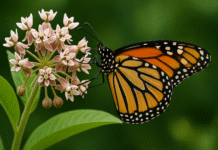
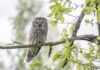
The second encounter continued with Estuardo Yacolca, representative of IES Peru, who deepened the exploration of the concept of the Ecological Shadow. Through the observation of images of nature—including animals, elements, and landscapes—Yacolca elicited both comfortable and uncomfortable emotional responses, inviting participants to explore their reactions. From an ecopsychological perspective, what we observe externally reveals valuable information about internal processes. Uncomfortable reactions to certain images represent unconscious attitudes incompatible with the conscious self, which tend to be projected outward.

Yacolca emphasized nature as both mirror and container of the psychic shadow. Within the ecopsychological paradigm, the shadow operates in an organismic manner, governed by natural laws and cycles that contain emotionality oriented toward deep self-regulation. To integrate the shadow, it becomes necessary to eco-literate our needs and to learn both the art of encounter and the science of “we.” When time and space are made available for this integration, connection and relationship with our nature-being intensify and strengthen.
The cycle concluded with the participation of Kleio Apostolaki, representative of IES Greece, who addressed nature-based solutions for mental well-being. Apostolaki first invited participants to question how health is defined: which parameters and indicators are used, and which are excluded. From a One Health perspective, the human being—as an integral part of the web of life—participates in an interconnected form of well-being that integrates environmental, animal, and human health.
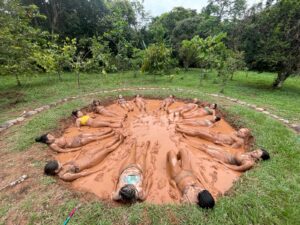 Apostolaki highlighted the direct relationship between connection with nature and mental health benefits under the guiding principle: connected minds, connected planet. Multiple nature-based interventions facilitate the return to our nature-being, including forest bathing, horticulture therapy, green prescriptions, and wilderness therapy. Evidence shows that spending more than 120 minutes per week in nature increases life satisfaction and reduces symptoms of depression and anxiety. Additionally, ecotherapy has demonstrated outcomes comparable to cognitive-behavioral therapy in reducing depression. Caring for our relationship with nature not only promotes individual mental health, but also reduces eco-anxiety and fosters behaviors and actions oriented toward ecosystemic health.
The International Ecopsychology Society and its representatives position themselves at the forefront of integrating planetary health through ecopsychology, promoting global advocacy and education, research and best practices, One Health integration, and community empowerment.